October 30, 2023
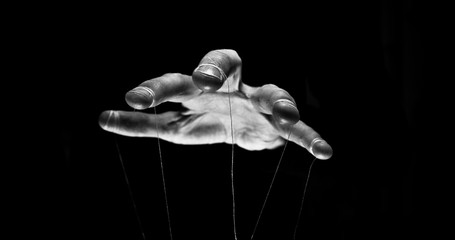
In uncertain times this question looms large in importance; what parts of life are within our control what parts lie outside of our control? I am writing about this topic, not only because it comes up so often in the therapeutic work I do with people, but also to process the way this question shows up in my own life. Without a balanced answer to this question we are likely to fall into one of two traps; the trap of powerlessness or the trap of over-powerful, magical thinking. Certainly, Hollywood movies and romance novels, along with the misuse of “law of attraction” thinking, that is prevalent in New Age spiritual circles have left us confused about how much control we have. Thus, many of us are surprised when life throws something at us that we never expected. In facing into the reality of life it seems to me that it would be more helpful to look at life as an initiation rather than a fairy tale. We can expect life to be challenging, but also to be joyful, lighthearted, loving, and at times wondrous.
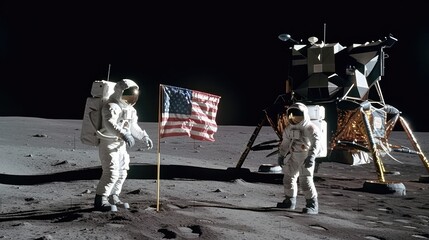
We do have power as human beings. Look at all the grandiose things we have been able to accomplish throughout human history. We have overcome gravity by creating objects that can fly, even all the way to the moon; we’ve built thousands of cathedrals, unreal in their height, detail, and artistry; we’ve sent a giant telescope into outer space that can look back in time billions of light years; we have created mass agriculture capable of feeding the billions of people that now inhabit this planet; we have built sky skyscrapers tall enough to reach into the clouds; we have even managed to create artificial intelligence. It seems there is almost nothing human beings cannot do.
Yet, at times, we cannot get ordinary things to happen, like getting a better job, getting a partner or loved one to stop their addiction, getting someone you have a crush on to notice you, or getting your kids to behave (Notice how many times I just said “getting!”). Truly, there are some parts of existence that are difficult, if not impossible, to control. There are a lot of complicated factors that come together to create the world the way it is. As Michael Singer has pointed out in his book The Surrender Experiment, the world would go on the same way with or without you. You can notice this fact when you observe the way the environment, social systems, and the economy function regardless of individual preferences.
Yet there are areas of our lives in which we CAN exercise a measure of control. For example, while you cannot control whether your body carries the gene to develop cancer or another illness, you may be able to control some of the factors that allow the gene to be expressed. As well, after receiving a diagnosis, many times proper treatment can be applied to bring the body back into a state of health and balance. You may not be able to control how much your employer pays you, but you can control whether or not you decide to stay in that job or leave to start your own business. You cannot make someone love you, but you can keep your heart open, and choose how you will treat others, creating the right conditions for love to flourish. You may not even be able to control having unwanted feelings like fear, anger, rage, and sadness, but you can decide how you will work with these emotions to transmute them into action, understanding, and growth. Most importantly, you cannot control the fact that you will die someday, but you can control how you choose to use the time that is given to you.
But maybe we need a different word than control which just sounds so grippy, graspy, and well….. controlling. What about the words influence or agency which may bear a closer relationship to the nature of human experience.

Consider that if I walk into a room then I am suddenly a part of a dynamic field. There are other people influencing the field as well, as many as are present in the room. If I consider that I am influencing the outcome of what happens in that room, while also being impacted by the actions of the other members of the field, then I can begin to see my own agency and influence and how it interacts with the agency of others. If I am not aware that I have choices about how I act, engage, and interact, then I fall back into my habitual reactions, am unaware of my power, and cannot wield it. Awareness is choice. Choice is power.
There are some even deeper layers to this topic of control. Alfred Adler, a contemporary of Freud in the early 1900’s, theorized that humanity’s primary drive was overcoming inferiority in favor of superiority. If life is essentially a competition, it is easy to see how that would create a worldview based in fear and would give rise to endless power struggles. I once heard this called “hell-realm” and it is an appropriate name for this way of being.

The influence of mindfulness and transpersonal psychology on the realm of mainstream psychology has taught us that there is another way of being that is paradoxical to the one of domination, control and manipulation. It is an entirely different “modus operandi” (mode of operating). The psychologist Abraham Maslow wrote about this way of being in his book Toward a Psychology of Being, in the 1960s. He distinguishes between two modes, doing and being, in which the first is based in deficiency, and the second is based in wholeness. This “B” mode of operating, or even more accurately this “BE” mode, is based in peace and it is built on the foundation of presence, awareness, and gratitude. It is not about manipulation but about surrendering to the experience of life as IT IS. Essentially, to stop one’s resistance to the things one cannot control. This is not a fatalistic resignation to the absurdities of life, but rather an outlook that presupposes that there is a much vaster and more intricate meaning to events than what we are aware of. In this “being” way of operating, life starts to take on a different quality. We become more present, open-hearted, alive, and receptive. Often there are more synchronicities. Life becomes richer, more inherently satisfying. There is a sense of “awe”. Maslow identified the values of the “being mode” as truth, beauty, goodness, wholeness, aliveness, uniqueness, just-right-ness, completion, justice, simplicity, richness, effortlessness, playfulness, and autonomy.

So how do you get there? Like all things true, the answer is simple but not necessarily easy to do. Coming to grips with WHAT IS might mean facing into some big feelings. The way forward is always through the heart. Not through avoidance. Use the agency and influence that you have right now in this moment. Do your very best. And then….. let go. Stop kicking against the goads. Truly, so long as we are determined to resist WHAT IS, we will have heartache. Acceptance of the aspects of life one cannot control creates peace.
Balance all of that with self-compassion. We all fall into the control trap from time to time. It is part of being a human being. When you find yourself there, know that you are in good company. Laugh at yourself. Be a friend to yourself. Allow yourself to experiment, make mistakes, and find out what works for you. That is the human experience.
In the words of the well-known serenity prayer:
God, grant me the serenity to accept the things I cannot change, the courage to change the things I can, and the wisdom to know the difference.